
What Is Subacute Rehabilitation — and Who Is It Really For?

Published by Wiley Mission | A Life Plan Community in Marlton, NJ

When an older adult is discharged from the hospital, families often feel a sense of relief. The emergency has passed. Treatment is complete. It may seem like the hardest part is over.

In reality, this moment marks the beginning of one of the most important—and misunderstood—phases of recovery. Subacute rehabilitation exists precisely because many seniors leave the hospital medically stable, yet not physically or functionally ready to return home safely.

Understanding what subacute rehabilitation is, and who it is truly for, can help families avoid preventable setbacks and support a safer, more successful recovery.

What Subacute Rehabilitation Really Means

Subacute rehabilitation is a short-term phase of care designed to help individuals recover strength, mobility, and independence after a hospital stay. It sits between acute hospital care and a return home, providing continued medical oversight while shifting the focus from treatment to recovery.

Unlike hospital care, which prioritizes diagnosis and stabilization, subacute rehabilitation concentrates on rebuilding function. Therapy is integrated into daily routines, nursing support remains available, and physicians continue to oversee care. The goal is not simply improvement, but safe, sustainable independence.

Why Hospital Discharge Doesn’t Mean Full Recovery

Hospitals are not designed for long-term recovery. Once a patient’s condition is stabilized and no longer requires acute intervention, discharge often follows quickly.

For seniors, even brief hospitalizations can result in noticeable physical decline. Time spent in bed leads to muscle weakness. Balance and endurance decrease. Fatigue sets in faster than expected. Tasks that once felt routine—walking to the bathroom, standing from a chair, preparing a meal—can suddenly feel difficult or unsafe.

Subacute rehabilitation exists because this gap between medical stability and functional readiness is both real and risky.

Who Subacute Rehabilitation Is Actually For?

Subacute rehabilitation is not about age alone. It is about readiness.

It is most appropriate for seniors who are medically stable but still need support to regain strength, mobility, or confidence before returning home. This often includes individuals recovering from surgery, illness, infection, cardiac or respiratory events, neurological changes, or general deconditioning after hospitalization.

If a person cannot safely walk, transfer, manage daily activities, or feels unsteady or exhausted with minimal exertion, subacute rehabilitation may be the safest next step. It provides time, structure, and professional oversight to rebuild function without unnecessary risk.

Why Families Often Misunderstand This Phase of Care

Many families hear terms like “skilled nursing” and “rehabilitation” used interchangeably, which can cause confusion. Subacute rehabilitation, however, is distinct in its purpose.

This phase of care is goal-driven and recovery-focused. Therapy is central, progress is measured, and the expectation is improvement. It is not long-term care, and it is not simply extended medical monitoring. It is an active recovery process designed to prepare individuals for the next phase of independence.

When this distinction is unclear, families may unintentionally rush decisions or underestimate the importance of structured recovery.

The Risks of Skipping Subacute Rehabilitation

One of the most common reasons seniors are rehospitalized is returning home before they are physically ready. Without adequate recovery support, small challenges can quickly escalate.

A moment of unsteadiness can lead to a fall. Fatigue can limit movement and slow healing. Confusion about medications can create complications. Fear of reinjury can reduce activity, leading to further weakness.

Subacute rehabilitation reduces these risks by allowing recovery to continue in a controlled environment where issues can be identified early and addressed before they become emergencies.

What Recovery Looks Like in Subacute Rehabilitation

Recovery during subacute rehabilitation is structured, but never one-size-fits-all. Therapy is tailored to individual ability and progresses gradually. Strength, balance, and endurance are rebuilt in ways that support real-life function, not just exercise goals.

Equally important, recovery is monitored closely. Care plans are adjusted based on how a person responds, not on arbitrary timelines. This thoughtful pacing helps prevent setbacks while building confidence and momentum.

The focus is not on rushing home, but on making home safe and sustainable.

Why Coordination and Oversight Matter

Successful recovery depends on coordination. Therapy, nursing care, and physician oversight must work together, communicating consistently and responding to changes as they occur.

At Wiley Mission, recovery is supported through interdisciplinary collaboration and ongoing medical involvement. This coordinated approach helps ensure that progress is steady, concerns are addressed early, and recovery remains on track.

When care teams work together, seniors benefit from stability and continuity during a vulnerable time.

How Families Can Recognize When Subacute Rehab Is Needed

Families often sense when something is not quite right. Signs that subacute rehabilitation may be appropriate include difficulty walking safely, rapid fatigue, fear of falling, confusion about daily routines or medications, or a lack of confidence about returning home.

Asking questions and understanding available options early can prevent unnecessary complications later. Choosing the right level of care at the right time is one of the most important decisions families can make during recovery.

A Critical Bridge Toward Independence

Subacute rehabilitation is not about delaying recovery. It is about protecting it.

By providing the time, structure, and support seniors need after hospitalization, this phase of care helps rebuild strength, confidence, and independence—reducing the risk of setbacks and setting the stage for long-term wellness.

For families navigating post-hospital decisions, understanding subacute rehabilitation can make all the difference between a smooth recovery and an avoidable return to the hospital.

To learn more about Wiley Mission Call us today at: (856) 983-0411 or fill out our contact form.

Related Reading


Why the First 30 Days After Hospital Discharge Matter So Much for Seniors

Published by Wiley Mission | A Life Plan Community in Marlton, NJ

For many families, the day a loved one is discharged from the hospital feels like a turning point. The crisis has passed. Treatment is complete. Home is in sight.

But for older adults, the weeks immediately following hospital discharge are often the most fragile phase of recovery—a time when strength is still rebuilding, routines are disrupted, and small challenges can quickly become serious setbacks.

Understanding why the first 30 days matter so much can help families make better decisions and support safer, more successful recovery.

The Hidden Vulnerability After Leaving the Hospital

Hospitals are designed to stabilize acute medical conditions. They are not designed to restore full strength, endurance, or independence. As a result, many seniors leave the hospital medically stable but physically depleted.

Even short hospital stays can lead to noticeable declines in mobility, balance, and stamina. Muscles weaken quickly when activity is limited. Fatigue sets in faster. Tasks that once felt routine—standing from a chair, walking to the bathroom, preparing a meal—may suddenly feel overwhelming.

This gap between medical stability and functional readiness is where many problems begin.

Why Seniors Are at Higher Risk During This Period

The weeks following discharge are often marked by rapid change. Medications may be new or adjusted. Sleep patterns are disrupted. Appetite may be reduced. Pain, weakness, or dizziness can linger longer than expected.

For seniors, these changes stack on top of one another. A slight loss of balance can lead to a fall. Fatigue can limit movement, slowing recovery further. Confusion about medications can cause complications. Emotional stress or fear of reinjury can reduce confidence and participation in daily activities.

This combination makes the post-hospital period one of the highest-risk windows for rehospitalization.

The Cost of “Pushing Through” Too Soon

Families often want to encourage independence as quickly as possible, and that instinct comes from a good place. However, pushing too hard or returning home without adequate support can backfire.

When seniors attempt to resume normal routines before their strength and balance have returned, the risk of falls, setbacks, and exhaustion increases. A single incident—such as a fall or missed medication—can undo weeks of progress and result in another hospital stay.

Recovery is not about speed. It is about timing and support.

How Structured Recovery Changes the Outcome

What makes the first 30 days so important is not just the risk—it is the opportunity.

With the right level of care and structure, seniors can use this period to rebuild safely. Subacute rehabilitation provides an environment where recovery continues with professional oversight, allowing strength, balance, and confidence to return gradually.

Therapy focuses on real-life function: walking safely, transferring confidently, managing daily activities, and building endurance. Nursing and medical oversight help identify issues early, before they become emergencies. Progress is monitored and adjusted based on how the individual responds, not based on a fixed timeline.

This structured approach dramatically reduces the likelihood of setbacks during this vulnerable window.

Emotional Recovery Matters Just as Much

Physical healing is only part of the picture. Many seniors experience anxiety, frustration, or loss of confidence after hospitalization. Fear of falling or reinjury can cause hesitation and withdrawal from activity, slowing recovery further.

Supportive environments that emphasize dignity, routine, and reassurance help seniors regain trust in their own abilities. When individuals feel respected and understood, they are more likely to engage fully in therapy and recovery.

Emotional stability supports physical progress.

The Role of Families During the First 30 Days

Families play an essential role during this phase, but the most helpful support is often not doing more—it is ensuring the right structure is in place.

Families can support recovery by:

  • Encouraging participation in therapy and recovery routines
  • Avoiding pressure to rush progress
  • Watching for signs of fatigue, confusion, or instability
  • Asking questions and staying informed about care plans
  • Supporting transitions thoughtfully, not abruptly

Clear communication and realistic expectations help prevent unnecessary stress for everyone involved.

Why This Window Shapes Long-Term Independence

The first month after hospitalization often determines whether recovery continues smoothly or becomes a cycle of setbacks and readmissions.

When seniors receive appropriate support during this time, they are more likely to:

  • Regain independence safely
  • Avoid falls and complications
  • Build confidence in daily activities
  • Transition home successfully
  • Maintain progress long after formal care ends

This is why clinicians often describe the post-hospital period as a make-or-break phase for senior recovery.

A Thoughtful Approach to Recovery

At Wiley Mission, recovery during the post-hospital period is approached with care, coordination, and respect for each individual’s pace. By recognizing the importance of the first 30 days and supporting seniors through this vulnerable phase, recovery becomes not just possible—but sustainable.

To learn more about Wiley Mission Call us today at: (856) 983-0411 or fill out our contact form.

Keller Williams Cherry Hill Making a Difference

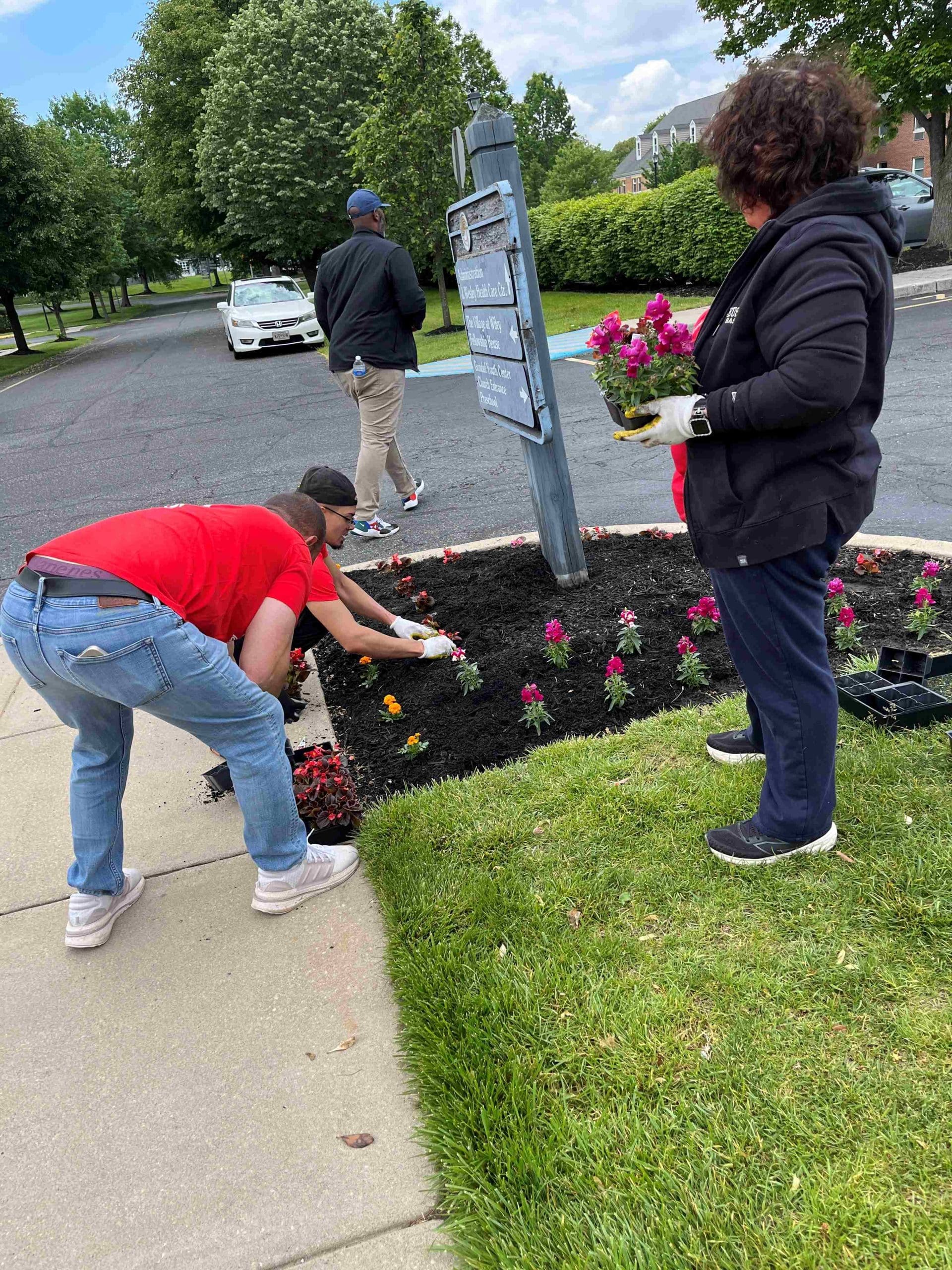
Keller Williams Realty of Cherry Hill spent their annual Red Day doing volunteer projects at Wiley Church. Some members of their team were outside planting a gorgeous array of snap dragons, marigolds, begonias and other summer favorites.


Keller Williams Red Day Volunteers at Wiley Church

Keller Williams Red Day Volunteers at Wiley Church

Keller Williams Red Day Volunteers at Wiley Church

The result of all their hard work will be a fantastic flower display as the summer season progresses.

Keller Williams Red Day Volunteers at Wiley Church

Meanwhile, the rest of the Keller Williams Team worked on indoor cleanup and painting projects.

Keller Williams Red Day Volunteers at Wiley Church

Keller Williams Red Day Volunteers at Wiley Church

Keller Williams Red Day Volunteers at Wiley Church

Thanks Keller Williams of Cherry Hill!


The Science of Friendship: Why Social Bonds Are Vital for Senior Health

Published by Wiley Mission | A Life Plan Community in Marlton, NJ

It might surprise you to learn that social isolation is now considered one of the most significant public health threats facing older Americans — comparable in health impact to smoking 15 cigarettes a day. Research from the U.S. Surgeon General and leading universities has elevated loneliness from a personal problem to a national concern for senior health.

But here’s the encouraging flip side: strong social bonds are equally powerful medicine. For seniors, meaningful friendships and community connection are among the most reliable predictors of long, healthy, satisfying lives.

At Wiley Mission in Marlton, New Jersey, community isn’t a feature of our Life Plan Community — it’s the foundation of everything we do.

What the Research Tells Us

The evidence on social connection and health is striking across virtually every measure. Older adults who maintain strong social relationships have been shown to have lower rates of cognitive decline, reduced risk of dementia, better cardiovascular health, stronger immune function, and significantly lower mortality rates than those who are socially isolated.

Friendship and connection also buffer against depression and anxiety — two of the most common and undertreated conditions among older adults. Having someone who knows your name, notices when you’re absent, and genuinely cares about your day is not a small thing. It may be one of the most important things.

The Loneliness Crisis — and Why Community Living Matters

For many seniors living alone in single-family homes, the reality of social isolation can creep in gradually. Adult children move away. Driving becomes difficult. Peers pass away. And what was once a full, connected life can quietly narrow.

This is one of the most compelling arguments for Life Plan Community living. When you choose a community like Wiley Mission, you don’t just gain a home — you gain neighbors who become friends, shared mealtimes that become anchors, organized activities that open unexpected doors, and staff who genuinely know and care for you.

For many of our residents, moving to Wiley was the single greatest step they took for their social wellbeing.

How Wiley Mission Fosters Connection

At our 55-acre campus on Main Street in Marlton, New Jersey, connection happens every day in ways both structured and beautifully spontaneous:

  • A rich calendar of activities, day trips, and events creates regular, low-barrier opportunities to engage.
  • Our intergenerational environment — with a preschool, summer camp, and church on the same grounds — means that residents interact with children, families, and community members of all ages.
  • Wiley Church provides a spiritual community that extends far beyond Sunday services, with prayer groups, Bible studies, and ministries that connect residents to one another and to the wider South Jersey community.
  • Our caring, attentive staff build genuine relationships with residents — knowing names, histories, preferences, and personalities.

Tips for Building and Maintaining Social Connection in Later Life

  • Say yes more than no — especially to new activities or groups that feel slightly outside your comfort zone.
  • Be the one who initiates. Friendships at any age require someone to take the first step.
  • Invest in a few deep relationships rather than many surface ones. Quality matters more than quantity.
  • Stay connected to family — and don’t underestimate the joy of intergenerational friendships.
  • If you’re feeling isolated, name it. Loneliness is not something to push through alone. Speak with a counselor, pastor, or trusted friend.

Come Find Your Community

Wiley Christian Retirement Community has been a home — and a community — for seniors in South Jersey since 1939. We serve residents 62 and older with a full continuum of care including 137 independent living homes, residential healthcare, long-term care, and subacute rehabilitation, all within a warm, faith-centered, intergenerational setting.

If you or someone you love is exploring senior living options in Marlton, Cherry Hill, Mt. Laurel, Medford, or the greater South Jersey area, we’d love to introduce you to the Wiley family.

To learn more about Wiley Mission Call us today at: (856) 983-0411 or fill out our contact form.


Wiley Mission’s Annual Flower Show

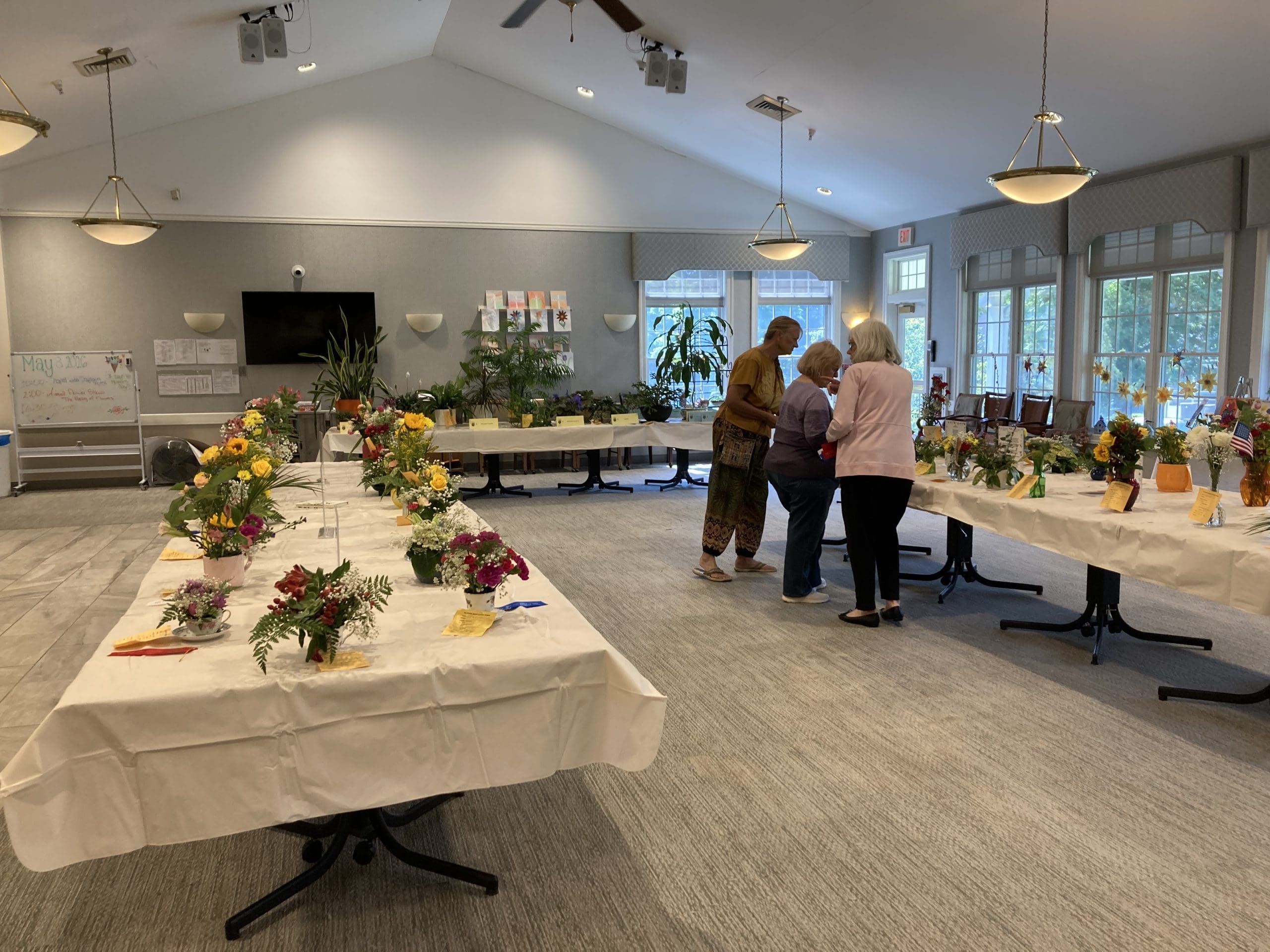
Wiley Mission held its Annual Flower Show on May 8th. Sponsored by the Garden Club of Marlton, the show is open to Wiley Healthcare, Residential and Subacute residents who created the flower arrangements with the help of the Garden Club in a workshop the day before show.

Wiley Village residents were also invited to bring their favorite plants and enter them under categories that are created by the Garden Club.  For a unique touch, we also had Christina Della Franco exhibit her paintings of seed packets that were created in her weekly painting class for the Village.

As you can see, the room was filled with beautiful bouquets. It must have been very difficult for the judges to select the winners.

Wiley Mission 2026 Flower Show


Wiley Mission 2026 Flower Show

The winning bouquet was a magnificent display of yellow roses, sunfloweres and daisies.


Wiley Mission has a great relationship with the Garden Club of Marlton. Each month, the club delivers miniature floral arrangements for residents in the Wiley healthcare unit who are celebrating birthdays. The bouquets, which come with happy birthday greetings attached, are designed to fit on a bedside table. These cheerful mini arrangements bring smiles to Wiley residents all year long!

We deeply appreciate the ongoing support of the Garden Club of Marlton to make this a very special event for the residents of Wiley.


The Power of Walking: How a Daily Stroll Supports Heart Health and Mood for Seniors

Published by Wiley Mission | A Life Plan Community in Marlton, NJ

It doesn’t require a gym membership, special equipment, or a strict schedule. It’s free, gentle on the joints, and one of the most researched health habits in the world. We’re talking about walking — and at Wiley Mission in Marlton, New Jersey, our beautiful 55-acre park-like campus happens to be one of the best places in South Jersey to do it.

For seniors 62 and older, a regular walking routine can be genuinely life-changing. Here’s what the science says — and how you can make it a joyful part of your daily life.

Walking and Heart Health: What Research Tells Us

Cardiovascular disease remains one of the leading health concerns for older adults, but regular moderate exercise — particularly walking — is one of the most effective preventive tools available. Studies have shown that adults who walk briskly for 30 minutes most days of the week can significantly reduce their risk of heart disease, high blood pressure, and stroke.

Walking strengthens the heart muscle, improves circulation, helps regulate blood pressure, and supports healthy cholesterol levels — all without the strain of high-impact exercise. For seniors managing existing heart conditions, a doctor-guided walking program can be part of a comprehensive care plan.

The Mood Connection: Walking as Natural Medicine

Physical benefits are only part of the story. Walking also has a profound effect on mental and emotional wellbeing. When we walk, our bodies release endorphins — the brain’s natural mood-elevating chemicals. Regular walkers report lower rates of depression and anxiety, better sleep, and higher levels of overall life satisfaction.

There’s also something deeply restorative about walking outdoors. At Wiley Mission, residents enjoy winding paths through mature trees, greenscapes, and wetlands — a serene natural environment that makes the daily walk feel less like exercise and more like a gift.

Walking and Fall Prevention

Falls are a significant concern for older adults, but regular walking is one of the best ways to reduce that risk. Walking strengthens the leg muscles, improves balance and coordination, and keeps joints flexible. Many physical therapists recommend walking as a core component of fall-prevention programs for seniors.

At Wiley Mission, our campus paths are designed with resident safety in mind, and our wellness team is always available to support residents in building healthy movement routines.

Tips for Making Walking a Daily Habit

  • Start small. Even a 10-minute stroll after breakfast is a meaningful beginning.
  • Walk with a friend or neighbor — social walking adds accountability and joy.
  • Wear supportive, well-fitting footwear and dress in layers for South Jersey’s seasonal changes.
  • Use a cane, walker, or trekking pole if you need extra stability — there’s no shame in smart preparation.
  • Time your walk for the cooler parts of the day in summer; dress warmly in winter.
  • Listen to music, a podcast, or an audiobook to make the walk feel like a treat.

Walking at Wiley Mission: A Community Built for Active Living

One of the reasons so many residents choose Wiley Christian Retirement Community in Marlton is the sheer beauty of the grounds. Situated on over 55 scenic acres, our campus offers residents the rare combination of a peaceful, walkable natural setting with the convenience of being right on Main Street — minutes from shopping, dining, and all that South Jersey has to offer. Center City Philadelphia is just a 30-minute drive away.

Whether you’re a current resident taking your morning loop around Wiley Village, a family member walking our grounds during a visit, or someone exploring life plan communities in the Marlton, Cherry Hill, or Mt. Laurel area, we’d love to welcome you.

Schedule a Tour of Wiley Mission Today

Wiley Christian Retirement Community has provided compassionate, faith-centered care for seniors since 1939. Located at 99 E. Main Street in Marlton, NJ, we offer independent living, residential healthcare, long-term care, and rehabilitation services — all within a vibrant, intergenerational campus that also includes Wiley Church, Wiley Christian Preschool, and Wiley’s summer camp.

To learn more about Wiley Mission Call us today at: (856) 983-0411 or fill out our contact form.

Always consult your physician before starting a new walking program, especially if you have a heart condition or balance concerns.


Keep Your Mind Sharp: Fun Brain Exercises for Seniors Every Day

Published by Wiley Mission | A Life Plan Community in Marlton, NJ

For a long time, scientists believed the adult brain was essentially fixed — that after a certain age, cognitive decline was simply inevitable and irreversible. But decades of neuroscience research have overturned that idea entirely. Today we know that the brain retains a remarkable capacity for growth, adaptation, and repair throughout our entire lives. Scientists call it neuroplasticity and brain exercises are the key.

The practical implication? How we use our minds every day matters enormously. At Wiley Mission in Marlton, New Jersey, supporting the cognitive health of our residents is as much a part of our mission as physical wellness and spiritual care. Here are some of our favorite brain-boosting habits and exercises.

  1. Daily Puzzles and Brain Games

Crossword puzzles, Sudoku, word searches, jigsaw puzzles, and similar activities have long been popular among seniors — and for good reason. These games engage working memory, pattern recognition, spatial reasoning, and language processing, giving multiple areas of the brain a structured workout.

Consistency matters more than intensity. A 20-minute crossword each morning is more valuable than an occasional marathon puzzle session. The New York Times Crossword, the AARP Games site, and countless puzzle books provide accessible, enjoyable options for daily practice.

  1. Learn Something New

Of all the things you can do for your brain, learning a new skill may be the most powerful. Research has found that acquiring genuinely new skills — as opposed to simply practicing familiar ones — creates new neural connections and strengthens the brain’s overall adaptive capacity.

Consider learning a new language, a musical instrument, watercolor painting, digital photography, or even a new card game. The mild frustration of the learning curve is actually part of what makes it so beneficial — the brain grows when it’s challenged.

At Wiley Mission, our activity calendar regularly features classes, workshops, and learning opportunities that help residents explore new interests in a welcoming, low-pressure environment.

  1. Read Widely — and Discuss What You Read

Reading engages comprehension, vocabulary, imagination, and long-term memory all at once. But discussing what you’ve read — whether in a formal book club or an informal conversation — adds another layer of cognitive engagement: articulating ideas, comparing perspectives, and responding to other viewpoints.

Consider joining or starting a book club in your community. Many Wiley residents have found book discussions to be among the most intellectually stimulating and socially rewarding parts of their week.

  1. Stay Socially Active

The connection between social engagement and cognitive health is one of the most consistent findings in aging research. Social interaction requires the brain to process language, read emotional cues, remember personal histories, and manage the flow of conversation — it’s cognitive exercise disguised as enjoyment.

At Wiley Mission’s campus in Marlton, NJ, social engagement isn’t something residents have to seek out — it’s woven into the fabric of daily life, from shared dining and campus events to the everyday interactions with neighbors, staff, children from our preschool, and members of Wiley Church.

  1. Physical Exercise — the Brain’s Best Friend

This one surprises many people: regular aerobic exercise is one of the single most effective things you can do for cognitive health. Physical activity increases blood flow to the brain, promotes the growth of new brain cells in the memory center (the hippocampus), and reduces inflammation — one of the key contributors to cognitive decline.

Walking, swimming, gentle yoga, and chair exercises all count. Even 20–30 minutes of moderate movement most days of the week can make a measurable difference in brain health over time.

  1. Prioritize Sleep

Sleep is when the brain consolidates memories, clears toxic waste products, and repairs itself. Chronic poor sleep is strongly linked to accelerated cognitive decline and increased Alzheimer’s risk. If sleep is a challenge, speak with your physician — many simple, non-pharmaceutical interventions can make a significant difference.

A Community That Champions Cognitive Vitality

At Wiley Christian Retirement Community in Marlton, New Jersey, we believe in caring for the whole person — body, mind, and spirit. Our residents benefit from a rich activity calendar, a stimulating campus, wellness programming, and a caring community that values every person’s mental vitality and growth.

Serving seniors 62 and older across South Jersey since 1939, Wiley Mission offers independent living, residential healthcare, long-term care, and rehabilitation services — all within a faith-centered community that genuinely feels like home.

To learn more about Wiley Mission Call us today at: (856) 983-0411 or fill out our contact form.

Note: Brain exercises are a valuable complement to, not a replacement for, medical care. If you have concerns about memory or cognitive changes, please speak with your physician.


5 Simple Morning Stretches for Seniors — Start Your Day Right at Wiley Mission

Published by Wiley Mission | A Life Plan Community in Marlton, NJ

There’s something powerful about a quiet morning. The birds are singing outside the window, the coffee is brewing, and the day is full of possibility. At Wiley Mission — our faith-based Life Plan Community nestled on 55 acres in the heart of Marlton, New Jersey — mornings like these are a gift.

But for many seniors, mornings can also bring stiffness, aches, or that familiar feeling of the body needing a little encouragement to get going. The good news? Just a few minutes of gentle stretching each morning can make a dramatic difference in how you feel for the rest of the day.

Here are five simple, safe stretches that our residents and wellness team love — no equipment required, and each can be done right from the comfort of your chair or beside your bed.

  1. Seated Neck Roll

Sit comfortably in a chair with your feet flat on the floor. Slowly drop your right ear toward your right shoulder, hold for 10–15 seconds, then gently roll your chin toward your chest and over to the left side. Repeat twice on each side. This relieves the tension that builds overnight and improves circulation to the neck and shoulders.

Tip: Breathe slowly and never force the movement. Let gravity do the gentle work.

  1. Shoulder Rolls

Still seated, roll both shoulders forward in slow, deliberate circles five times, then reverse the direction. This loosens up the shoulder joints and upper back — areas where many seniors carry tension — and can help improve posture throughout the day.

  1. Seated Forward Bend

Sit at the edge of your chair. With a straight back, slowly hinge at the hips and reach your hands toward the floor or your shins. Hold for 15–20 seconds, breathing deeply. This stretch gently lengthens the lower back and hamstrings — key muscles for balance and walking comfortably.

  1. Ankle Circles

Extend one leg slightly off the floor and slowly rotate your ankle clockwise five times, then counterclockwise. Switch feet. This simple movement improves circulation in the lower legs, reduces morning swelling, and warms up the joints before standing.

  1. Standing Calf Raise (Using a Wall for Balance)

Stand facing a wall with both hands lightly resting on it for support. Slowly rise onto the balls of your feet, hold for two seconds, then lower back down. Repeat 10 times. This strengthens the calves, improves balance, and is one of the single best things seniors can do to protect against falls.

Why Daily Movement Matters as We Age

Research consistently shows that regular gentle movement — even just 10 to 15 minutes a day — helps seniors maintain flexibility, improve mood, support heart health, and reduce the risk of falls. At Wiley Mission, our commitment to whole-person wellness means we support residents in staying active, engaged, and joyful at every stage of life.

Discover Wellness at Wiley Mission

Located at 99 E. Main Street in Marlton, New Jersey, Wiley Christian Retirement Community has served seniors 62 and older since 1939. Our 55-acre campus offers a continuum of care including independent living, residential healthcare, long-term care, and subacute rehabilitation — all within a warm, faith-centered community.

To learn more about Wiley Mission Call us today at: (856) 983-0411 or fill out our contact form.

Always consult your physician or physical therapist before beginning a new exercise routine.


Medicare vs. Medicare Advantage: Understanding Your Options for the Best Care

Published by Wiley Mission | A Life Plan Community in Marlton, NJ

As we get older, health care decisions become some of the most important choices we make. Among these decisions, choosing the right Medicare coverage can feel overwhelming. With so many plans, rules, and benefits, it’s easy to feel unsure about which direction to take — especially when friends, TV ads, and mailings seem to be offering different advice.

At Wiley Mission, our focus is on supporting seniors and their families, not on selling insurance plans. That’s why we’re committed to providing clear, unbiased information to help you make the decision that’s best for you and your health. Whether you choose Original Medicare or a Medicare Advantage plan, the goal is the same: ensuring you have access to the care you need, when you need it.

In this article, we’ll explain the key differences between Original Medicare and Medicare Advantage, outline the potential benefits and drawbacks of each, and share what you should consider before making a decision.

What Is Original Medicare?

Original Medicare is the traditional federal health insurance program that has been in place since 1965. It consists of two main parts:

  • Part A – Hospital Insurance
    Covers inpatient hospital stays, skilled nursing facilities, hospice care, and some home health care.
  • Part B – Medical Insurance
    Covers outpatient care, doctor visits, preventive services, and medical equipment.

Key features of Original Medicare:

  • You can see any doctor or hospital nationwide that accepts Medicare. There are no networks or referrals required.
  • No prior authorizations are typically needed for most services. If your doctor says you need a test or procedure, Medicare generally covers it.
  • You pay a 20% coinsurance for most services after meeting your deductible.
  • There is no yearly cap on out-of-pocket costs unless you buy a supplemental insurance plan, known as Medigap.

Many people with Original Medicare also purchase:

  • Medigap plans to cover deductibles, copays, and coinsurance.
  • Part D prescription drug plans to cover medications.

This combination offers broad coverage and flexibility, though it often comes with higher monthly premiums.

What Is Medicare Advantage?

Medicare Advantage, also known as Part C (or Managed Medicare), is an alternative way to receive your Medicare benefits. These plans are offered by private insurance companies approved by Medicare.

How Medicare Advantage works:

  • Plans often combine Part A, Part B, and sometimes Part D prescription coverage into one package.
  • Many include extra benefits not offered by Original Medicare, such as dental, vision, hearing aids, and gym memberships.
  • They use provider networks, similar to employer insurance plans (HMO or PPO).
  • Most services require prior authorizations, meaning the plan must approve certain tests, procedures, or rehab services before you receive them.

Why some people choose Medicare Advantage:

  • Often lower monthly premiums, sometimes as low as $0.
  • Annual out-of-pocket maximum, which limits how much you’ll pay in a year for covered services.
  • Convenience of “all-in-one” coverage.

However, this convenience can come with trade-offs, especially for individuals with serious or complex health needs.

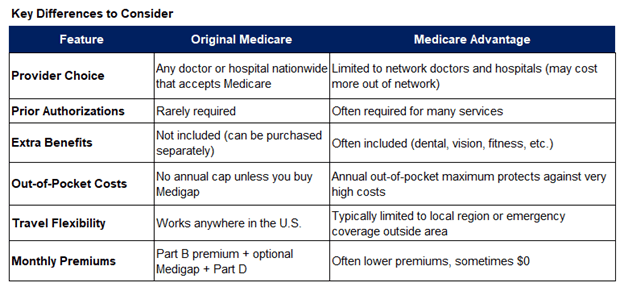
Medicare vs Medicare Advantage


Why Some Older Adults Prefer Original Medicare

Some seniors, particularly those with complex or serious health conditions, prefer Original Medicare for its flexibility and lack of barriers.

  1. Freedom to Choose Providers
    If you see specialists at different hospitals, travel often, or want to be able to access care anywhere in the U.S., Original Medicare is often the better fit.
  2. Fewer Delays in Care
    Medicare Advantage plans can require prior approvals for many services. This process sometimes delays care, which can be stressful or risky for those needing urgent treatment.
  3. Access to Specialized Facilities
    Certain rehab centers or specialized hospitals may not be in an Advantage plan’s network. With Original Medicare, you’re not limited by these networks.
  4. Predictable Coverage with Medigap
    While Medigap plans have higher monthly premiums, they can greatly reduce surprise bills and give peace of mind.

When Medicare Advantage Can Be a Good Fit

Medicare Advantage plans aren’t “bad” — they simply work best for certain individuals, especially those in good health or on a tighter budget.

  • Lower Monthly Costs
    If you rarely need medical care, a plan with a $0 premium and capped annual spending might save you money.
  • Bundled Benefits
    Extras like dental, vision, hearing, and fitness memberships can provide valuable services not covered by Original Medicare.
  • Budget Protection
    The annual out-of-pocket maximum ensures you won’t face unlimited bills in a year, something Original Medicare doesn’t offer without Medigap.

For many healthy adults, these plans provide affordable and convenient care — as long as they are comfortable staying within a provider network and following plan rules.

Questions to Ask Before Choosing

Making this decision is personal, and there’s no one-size-fits-all answer. Before enrolling in either type of plan, ask yourself:

  1. How often do I need care?
  • Frequent specialist visits may favor Original Medicare.
  • Occasional checkups might work well with Advantage.
  1. Do I travel often or live in two places?
  • Original Medicare is nationwide; Advantage plans are usually local.
  1. Are my doctors and hospitals in the network?
  • If not, you may have to change providers with an Advantage plan.
  1. Can I afford higher monthly premiums for peace of mind?
  • Medigap plans cost more but provide very predictable coverage.
  1. How important are extra benefits like dental and vision?
  • If these matter, Advantage may offer a more convenient package.

Wiley Mission’s Role: Providing Unbiased Guidance

At Wiley Mission, we understand that choosing between Original Medicare and Medicare Advantage can be confusing and emotional. That’s why our role is not to sell you a plan, but to help you understand your options so you can make the decision that’s right for you and your family.

Our team stays up to date on Medicare policies and local provider networks so we can offer accurate, unbiased information. Whether you choose to stay with Original Medicare or enroll in a Medicare Advantage plan, our only goal is to ensure you have the knowledge to make a confident choice.

We encourage you to:

  • Speak with a trusted insurance advisor or licensed Medicare counselor.
  • Review the Medicare.gov Plan Finder to compare plans in your area.
  • Talk to your doctors to understand how each option affects your access to care.

The Bottom Line

Both Original Medicare and Medicare Advantage have their strengths and drawbacks. The right choice depends on your health needs, budget, and lifestyle.

  • If you value freedom of choice and immediate access to care, Original Medicare with a Medigap plan may be the better fit.
  • If you want lower monthly costs and extra benefits, and you’re comfortable staying within a provider network, Medicare Advantage could be a good option.

At Wiley Mission, we believe informed decisions lead to better health outcomes. By providing clear, unbiased information, we aim to empower older adults to take control of their health care journey — no matter which path they choose.

To learn more about Wiley Mission Call us today at: (856) 983-0411 or fill out our contact form.

Wiley Mission Celebrates Nurses Week with a Special Lunch Honoring Our Care Team

At Wiley Mission, Nurses Week is more than a celebration—it’s an opportunity to recognize the compassion, dedication, and heart our nurses bring to residents and patients every single day.

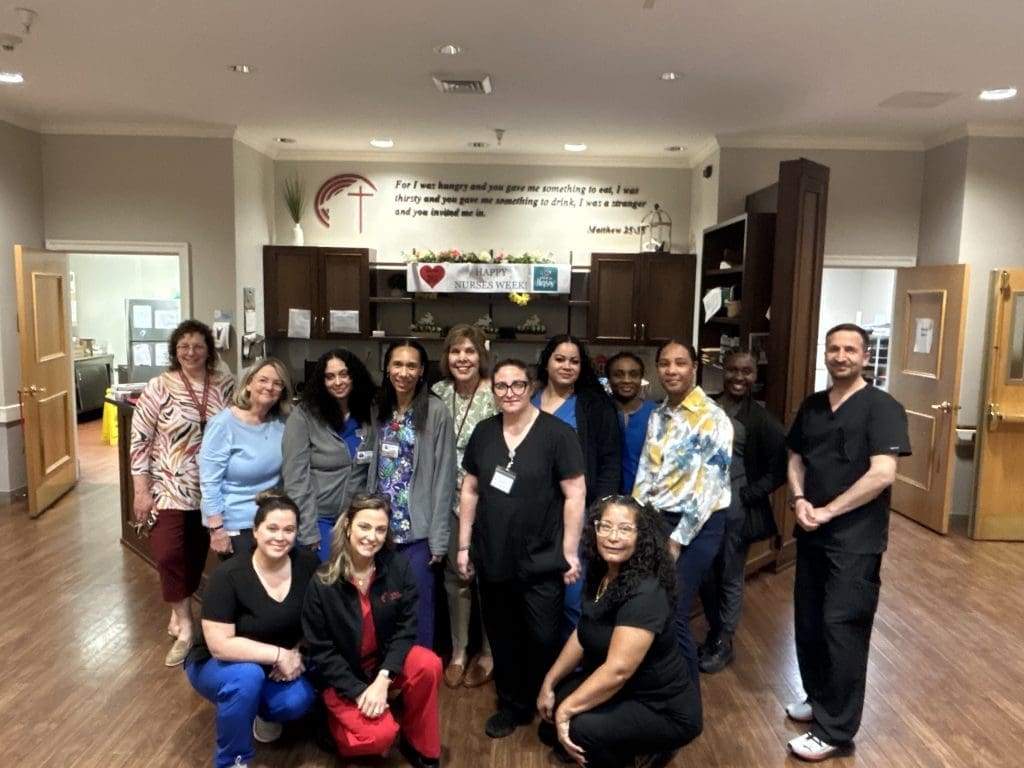
To show our appreciation, Wiley recently hosted a special Nurses Week lunch for members of our nursing team. The event brought staff together for an afternoon of gratitude, fellowship, and recognition as we honored the incredible work our nurses provide throughout the year.

From skilled nursing and long-term care to short-term rehabilitation and daily resident support, our nurses play a vital role in creating the caring and compassionate environment that defines Wiley Mission. Their commitment extends far beyond medical care. They provide comfort during difficult moments, encouragement during recovery, and meaningful connections that help residents feel truly at home.

During the luncheon, team members gathered to enjoy food, conversation, and a well-deserved pause from their busy schedules. The event also served as a reminder of the strong sense of community that exists throughout Wiley Mission.

“Our nurses are at the heart of the compassionate care provided at Wiley Mission,” said Gary F. Gilmore, Wiley’s President & CEO. “Alongside the dedication of our entire team, their compassion, patience, and commitment make a meaningful difference in the lives of our residents and families every day. We are deeply grateful for all they do.”

Wiley Mission is proud of the exceptional nursing professionals who serve our community with skill, empathy, and Christ-centered care. Their work helps create an environment where residents feel respected, supported, and valued.

As Nurses Week continues, Wiley Mission extends heartfelt thanks to every nurse on our team for the difference they make each and every day.

To learn more about open nursing positions at Wiley Mission please click here.

Website Managed By: Strategic Websites

Website Created By: Grey Matter Direct